Peter and Helen’s reconciliation through blood
The RadleysPeter and Helen’s reconciliation through blood turns a private act of drinking into a renewal of their marriage. They begin with blood in wine glasses, but the deeper change comes when they choose to taste each other’s blood: a shared intimacy that answers years of distance without erasing the past Helen still wants to disclose.
Background and Stakes
Peter and Helen approach this moment with different histories of vampirism. Peter explains to Rowan that he was not converted: the Radleys have been vampires for generations, and he has always been one. Helen, by contrast, was converted. That difference matters to their marriage because her conversion is bound up with Will Radley, Peter’s brother and Helen’s former lover. Helen has been unable to say that she loves Peter with conviction since her conversion, and the old relationship continues to shape what she believes she owes him.
The couple now identify as abstainers. Peter explains that they no longer kill or convert anyone and that the outside world sees them as ordinary human beings. Their restraint is more than a public disguise: it sets limits on how they use blood and on the intimacy they allow themselves. The novel also establishes that blood is not a simple cure for craving; it can magnify desire. Against that background, choosing to drink together is emotionally charged. It brings them close to something they have kept at a distance, while exposing the difference between sharing blood as a couple and using blood to convert someone.
That distinction is made explicit elsewhere when Helen warns Jared that giving Eve blood would make her a vampire and could give her powerful feelings toward the person whose blood was used. Peter and Helen are already vampires, so their mutual drinking does not create a new vampire or repeat Helen’s conversion. Instead, it makes blood a means of closeness between spouses who have been unable to inhabit that closeness freely.
A Careful First Step
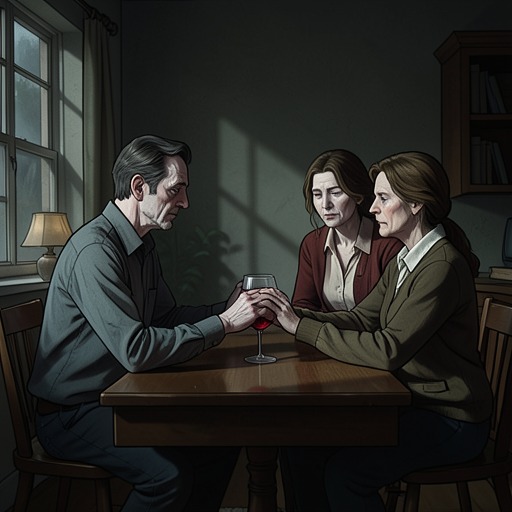
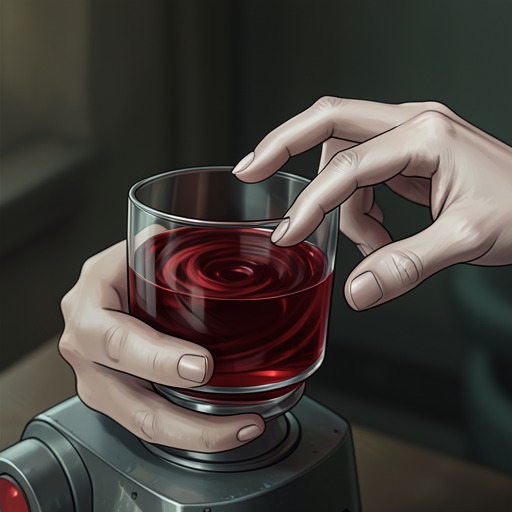
Back at home, Peter and Helen drink bottled blood in bed, using wine glasses they bought from Heal’s just before Christmas the previous year. They have decided to be civilized about it. The glasses give the act the appearance of an ordinary shared drink, a domestic ritual fitted around a substance that belongs to their hidden nature. Their first sips are tentative, and Helen feels more awake and alive than she has in years.
Peter looks toward Helen’s neck, and she understands that he would rather taste her blood than continue with the bottled supply. She wants the same kind of closeness, but also recognizes that moving directly to it would feel wrong, as if they were trying to build on false foundations. Her hesitation does not cancel her desire; it shows how carefully the couple must distinguish physical intimacy from the trust they have not yet repaired. For the moment, they remain with the wine glasses and the conversation their shared drinking makes possible.
Love Before Disclosure
Peter apologizes for what happened the other night, though Helen is unsure which part of their history he means. She wonders whether he can forgive what has happened between her and Will, whether the years of lies have damaged their marriage beyond repair, and whether the truth about Rowan will prove too much. Those doubts gather around her as she tries to turn the moment toward the past and its continuing consequences.
Helen tells Peter that she has things to explain about Will, about herself, and about the two of them. Before she can make that disclosure, Peter names what he needs most: assurance that she loves him. His request cuts through the wider reckoning she has prepared for. Helen answers plainly, then goes further: she wants to grow old with him and wants that future more than anything. Her declaration is a change in their pattern. Since her conversion, she has not been able to express her love with the same ease or conviction; now the words come naturally, even though the complete account she means to give remains unfinished.
Peter does not insist that she tell him everything at once. He reflects that people accept the facts they want to believe and ignore the rest, then chooses to believe in their love and in the possibility that it has endured beneath what came between them. His faith is not evidence that the secrets no longer matter. Rather, it is his decision to treat their relationship as real despite uncertainty. Helen is willing, for the moment, to believe with him.
Mutual Blood and Reconciliation
Hours later, Peter and Helen draw close without making a formal plan to resume their earlier intimacy. Their teeth change, and they find themselves tasting each other’s blood. The movement from bottled blood in separate glasses to blood shared between them marks the event’s decisive turn: what first seemed too compromised to attempt becomes a mutual act that neither has to force into words.
For both of them, the experience feels different from what they have known before. Their renewed intimacy is no longer governed in the same way by fear and doubt; each recognizes a warmth and familiarity that the marriage has possessed without fully feeling. Blood here functions as more than nourishment or a trigger of vampiric appetite. It becomes a bodily expression of recognition, joining the spouses in an act that they choose together rather than inheriting through conversion.
The reconciliation remains a beginning, not a resolution of every fact Helen has withheld. She has told Peter that the past still affects them, and he has answered first by asking for love and then by placing faith in their shared life. Their mutual drinking gives that faith a physical form. The scene’s domestic details—the familiar wine glasses, the cautious first sips, and the later movement toward each other—make the change quiet but substantial: abstainer restraint gives way to chosen intimacy, while the marriage’s unresolved history stays present within the renewed bond.